ステロイドで改善しない難聴
根本原因の解決は「時間」との戦いです

ステロイドで改善しない難聴、根本原因の解決は「時間」との戦いです

Treatment for Sudden Hearing Loss That Has Been Left Untreated

Disclaimer - This is a machine-translated version for reference only. For official and accurate medical information, please refer to the Japanese version.

Kana Yoshiike, Acupuncturist at Moriue Acupuncture and Orthopedic Clinic

Updated 2026.01.26

Can sudden hearing loss recover even after some time has passed since its onset?

Is it possible to recover if more than a month has passed since the onset of sudden hearing loss? | Mr./Ms. S.O., Yamanashi Prefecture

For a little while, I had a feeling of fullness in my ears and a high-pitched ringing sound. Then one day, I suddenly found it difficult to hear in my right ear.

I received treatment at the hospital, but it didn't improve as much as I hoped. Before I knew it, quite some time had already passed.

I was told, "Further recovery might be difficult," and to be honest, I just didn't know what to do anymore...

S.O. Yamanashi Prefecture

It is understandable to feel lost when you have undergone proper treatment and yet see no change.

In fact, many people come to us with the same concern, saying, "Some time has already passed, but..."

When it comes to sudden hearing loss, just because time has passed does not mean that the story ends there.

First, let's organize and think through your current condition and what factors might be influencing it, one by one.

Kana Yoshiike, Judo Therapist and Acupuncturist

Recovery is Possible Even 1 Month, 6 Months, or Over a Year After Onset

Even if time has passed since the onset of sudden hearing loss, changes in hearing and opportunities for recovery can still be found.

Even after hospital treatment has concluded, there are still potential approaches and key points to consider depending on the individual's condition.

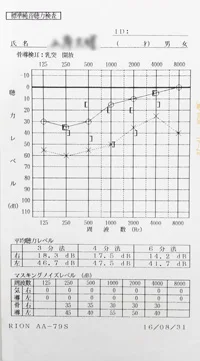
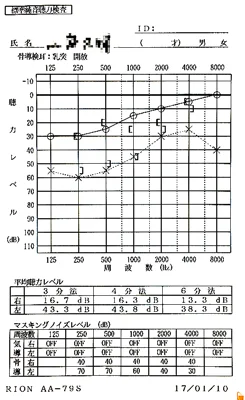
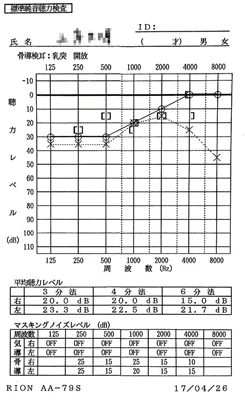
The graph below belongs to a patient who had actually passed the 6-month mark since onset and was told by the hospital that "recovery would be difficult." About three and a half months after starting treatment at our clinic, low-frequency hearing recovered to the normal level (30dB).

As seen here, it is not uncommon for hearing itself to recover, in addition to improvements in aftereffects.

2016.08.31
At Onset

Before Treatment

2017.01.10
Started Acupuncture & Sound Therapy

During Treatment

2017.04.26
Low frequencies recovered to normal (30dB)*

After Treatment

*This value is evaluated from an ENT medical perspective as having improved to a level where "practically, there is almost no hindrance to daily life (borderline of the normal range)."

*Treatment results may vary among individuals.

Patient Testimonials

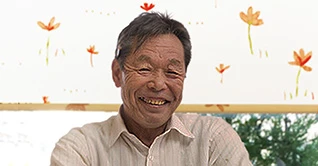
  • Mr./Ms. S.K. from Nagano who treated sudden hearing loss resistant to medication

    S.K.Nagano City

    Aftereffects of Sudden Hearing Loss

    The resonance of sound improved

    The resonance caused by aftereffects was very painful, but after starting acupuncture and sound therapy, it gradually got better. As a carpenter, I couldn't bear the sound of hammering nails and was halfway to giving up, thinking of retirement. Thanks to the treatment, I can continue my work.

  • Mr./Ms. H.A. from Kanagawa who treated sudden hearing loss resistant to medication

    H.A.Kanagawa Prefecture

    Sudden Hearing Loss resistant to steroids

    Tinnitus improved!

    Since I have diabetes, I received steroid drips while controlling my blood sugar, but it didn't heal at all. I was anxious every day thinking about the future. But after starting acupuncture at Moriue, my tinnitus improved significantly by the time a week had passed! I never expected such effects to appear. I am truly grateful from the bottom of my heart.

  • Mr./Ms. M.S. from Niigata who treated sudden hearing loss resistant to medication

    M.S.Niigata Prefecture

    Sudden Hearing Loss starting with dizziness

    I was able to return to work

    Hospitalization and IV drips didn't cure it, so I had steroids injected into the ear multiple times, but the noisy tinnitus and sound resonance almost drove me crazy. It took time, but thanks to Moriue's treatment, I successfully returned to work.

*"Patient Testimonials" are personal impressions.
Treatment methods and outcomes vary depending on the disease.

Since the root causes of ailments vary by person, we perform a full-body examination before proposing a treatment plan suited to that patient.
If you have any questions or concerns, please consult us via the "Free Consultation Now" button.

Why hospitals say it's "incurable" or "nothing more can be done"

Because hospital treatment aims to suppress inflammation immediately after onset

Sudden hearing loss is believed to be caused by acute inflammation in the inner ear, so hospitals primarily utilize steroid-based treatments.

Steroids promote hearing recovery by suppressing inflammation, and they are considered to be most effective when administered in the early stages after onset.

If no change is seen after a certain period, the treatment is brought to a conclusion

If sufficient improvement is not observed even after steroid treatment, you may be told that "there is little else that can be done" at the hospital.

This usually does not mean "you will never recover," but rather that the standard treatments available at the hospital have reached a logical endpoint.

After that, it is common to monitor the progress of your hearing while using medications such as Adenosine Triphosphate (Adephos) or Mecobalamin (Vitamin B12).

Why opportunities for recovery remain even after time has passed

Sudden hearing loss is not just an issue within the ear

While sudden hearing loss is often thought of as simply an "ear disease," in reality, it is frequently connected to the condition of the entire body, not just the ears.

Even after hospital treatment has concluded, factors affecting your hearing may still remain depending on your physical condition.

Stress or physical imbalances may be hindering recovery

When we examine patients who did not see sufficient improvement with hospital treatment, we often find that their bodies are tense due to excessive stress, or that blood flow to the inner ear is obstructed by misalignment in the neck or body balance.

These conditions can sometimes become more apparent as time passes. Even for those who have passed the several-month mark since onset, these issues may persist as barriers preventing the recovery of hearing.

Addressing these root causes can trigger positive changes

By re-evaluating the body's condition and focusing on factors such as stress, blood flow, and posture, some patients begin to notice changes in their hearing.

This does not mean that it "suddenly cures itself after a long time." Rather, it is easier to understand it as: once the factors hindering recovery are resolved, positive changes in hearing are more likely to occur.

[By Period] How to approach recovery based on time elapsed

When about 1 month has passed since onset

While sudden hearing loss tends to respond better the sooner treatment begins, many cases still see changes in hearing even after about one month has passed.

In fact, many patients visit us about 3 to 4 weeks after onset, once they have finished hospital treatment. Depending on the care received during this period, the condition of their hearing can still change significantly.

When about 6 months have passed

Once several months have passed since onset, the brain begins to recognize the state of "reduced hearing" as the new standard. Consequently, the pace of improvement tends to be slower compared to the period immediately after onset.

However, even at this stage, if you continue to experience discomfort such as tinnitus, resonance, or sound distortion, it suggests that there may still be room for adjustment and improvement in your hearing.

When 1 year or several years have passed

If more than a year or several years have passed since onset, dramatic changes rarely occur within a short period.

Even so, we often see improvements in daily life quality, such as a reduction in tinnitus or the feeling of fullness in the ear, and easier listening in everyday situations.

At this stage, rather than focusing solely on "restoring original hearing levels," it is important to assess your current condition and address the factors affecting your hearing one by one.

Beware of the feeling that "it seems to be getting better"!

As time passes after the onset of sudden hearing loss, many people feel, "I've gotten used to it more than at the beginning," or "It doesn't bother me as much as it used to."

While such changes are not uncommon, it is important to note that this does not always mean actual "recovery."

You may have simply "gotten used to" the hearing loss

When a state of reduced hearing persists, the brain may accept that condition as the standard, leading you to feel that "the discomfort has lessened."

In this case, even if the actual hearing level has not significantly improved, you might subjectively feel that "it seems to have gotten better."

Is your other ear just compensating...?

When hearing is reduced in one ear, the body unconsciously tries to compensate for the sound using the good ear.

As a result, even if you no longer have trouble with daily conversation, you may be unknowingly placing a burden on your good ear.

Even if you feel you are "living without problems," tests often reveal that a significant gap in hearing ability between the left and right ears remains.

Therefore, for sudden hearing loss where time has passed, it is important not to judge based on sensation alone, but to objectively assess and think through your current condition once more.

Why Moriue Acupuncture & Orthopedic Clinic can treat long-term cases

We perform acupuncture after checking the state of the entire body

Sudden hearing loss is often classified as "sensorineural hearing loss of unknown cause," but in reality, it is not uncommon for blood flow conditions and stress to be involved.

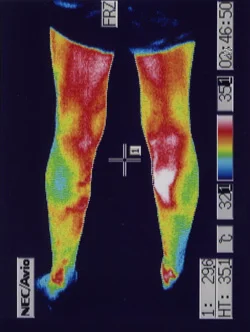
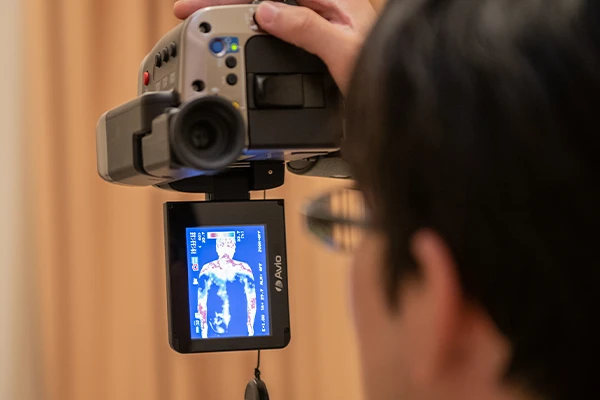
At our clinic, we use medical thermography to check body surface temperature and understand the overall condition before applying acupuncture focused on stress and blood flow irregularities.

By organizing the body's condition, the factors affecting hearing become easier to identify, which can lead to subsequent positive changes.

Before
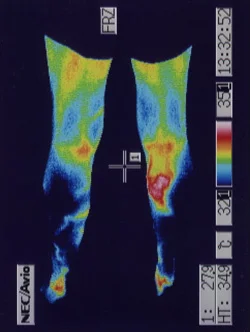
Calf blood flow state: Before acupuncture

After

Calf blood flow state: After acupuncture

*By improving the pumping function of the calves, known as the "second heart," systemic blood flow is more easily balanced.

Effective treatment through Acupuncture + Sound Therapy

For those who have passed the early stages of onset, combining acupuncture with sound therapy is more effective.

Since sound is processed not only by the ears but also by the brain, sudden hearing loss can sometimes cause the brain to become hypersensitive to sound.

In sound therapy, we perform rehabilitation using sounds tailored to your hearing condition, aiming to adjust the balance of how the ears and brain perceive sound.

Since hearing often recovers, unpleasant tinnitus, sound distortion, and aural fullness gradually become less bothersome.

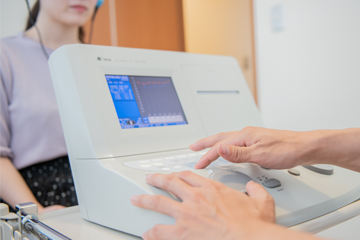
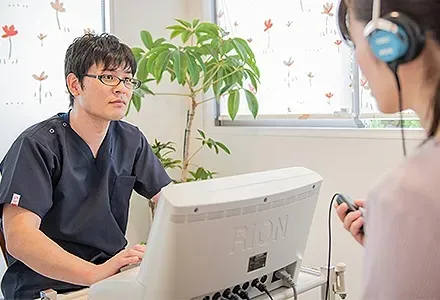
Hearing test with an acupuncture audiometer
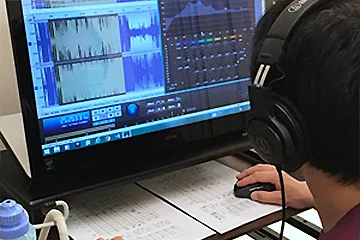
Creating a sound therapy CD tailored to the patient

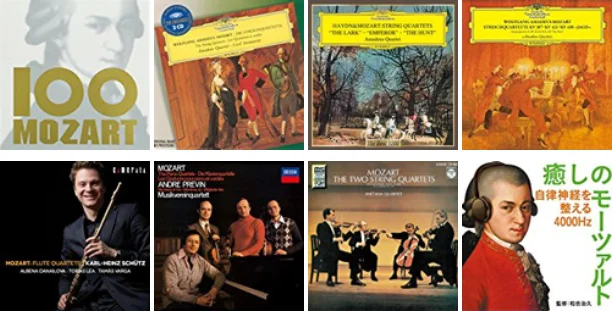
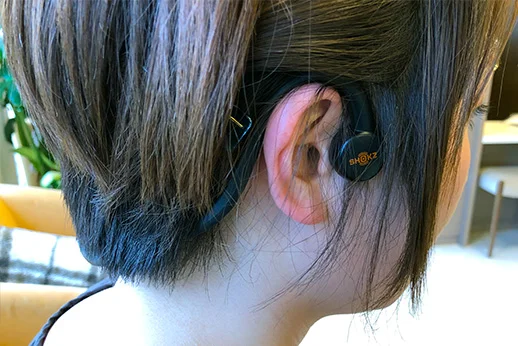
*At our clinic, we process Mozart quartets according to the patient's hearing level and conduct sound therapy where patients distinguish sounds using bone conduction headphones.

For high-frequency hearing loss, it is effective to distinguish the sound of the violin, and for low-frequency hearing loss, the cello.

Classical music considered good for the ears
Distinguishing sounds with bone conduction headphones


To those who feel "it might be too late..."

Even if you were told "it won't get better," there are still options left

When time has passed since onset, it is natural to feel anxious and wonder, "Is it too late now?" However, many people visit our clinic harboring these same fears and are actually seeing improvements. The duration since onset does not determine everything.

Why can you still expect change now?

At our clinic, we do not view this as solely an ear problem, but re-evaluate it from the perspective of your entire body's "constitution."

Supporting the "Power to Heal": Acupuncture helps the weakened parts of the body and enhances your natural ability to recover. While we cannot make a medical "promise of a complete cure," we can support your body with an approach different from medication.

Improving "Blood Circulation" to Prevent Recurrence: It is said that individuals with poor blood flow or a constitution prone to blockages are more susceptible to this condition. We examine the entire body to check for such constitutional tendencies. By caring for your constitution, we can also reduce the anxiety of recurrence.

Feel free to start with just a consultation

If you are even slightly wondering, "Is it okay to leave it like this?", that thought can be the catalyst to change your current situation.

Even if you were told at the hospital that "further improvement is difficult," please let us examine you once before giving up. You do not need to force yourself to make a decision. Why not start by simply understanding the current state of your body together with us?

Author Information

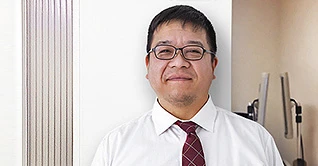
Kana Yoshiike, Acupuncturist & Judo Therapist

Written by

Kana Yoshiike, Acupuncturist & Judo Therapist

After studying traditional medicine in various countries, she mastered the anatomy of the face and ears upon returning to Japan. She excels at hearing tests and specializes in acupuncture for sudden hearing loss and knee conditions. Known for her cheerful personality that instantly brightens the room, she is deeply trusted by her patients. Her only personal concern is her slightly unclear articulation—though her international patients imply they don't notice it at all.

About Our Clinic

We are an acupuncture clinic specializing in sudden hearing loss, located in Suzaka, Nagano Prefecture.

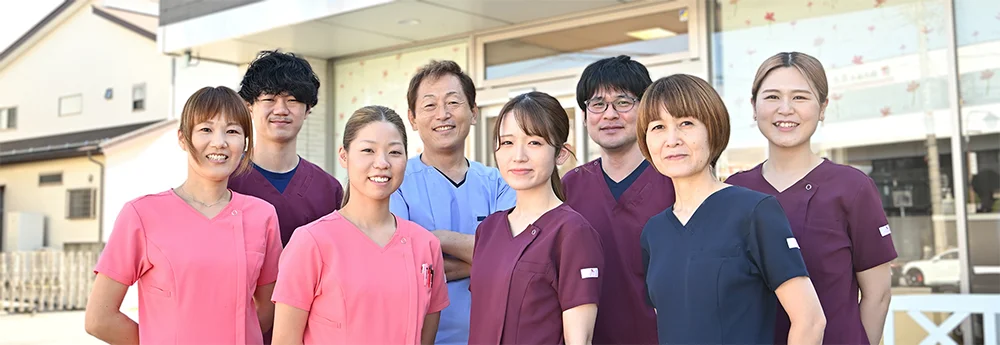
Acupuncturists and Staff at Moriue Acupuncture and Orthopedic Clinic

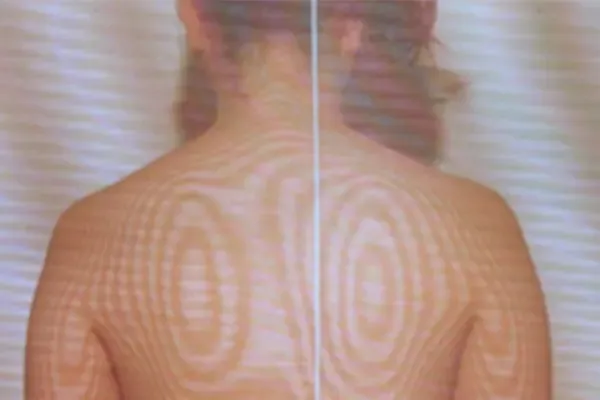
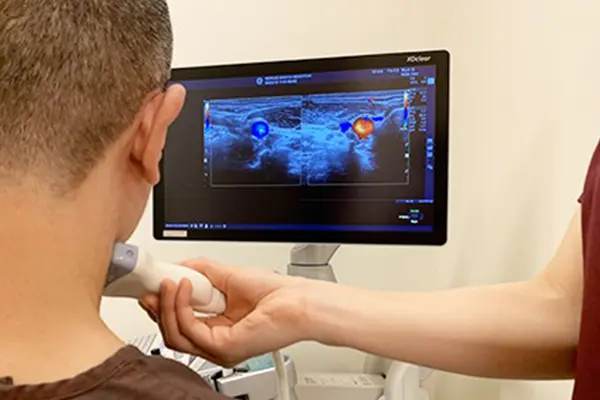
We perform full-body examinations using hearing tests, medical thermography, cardiovascular ultrasound, and Moiré topography to address sudden hearing loss from its root cause through acupuncture treatment.

Quickly Identifying the Cause

6 Examinations at an Acupuncture Clinic Specializing in ENT

  • Audiogram

    Hearing Test (Audiometry)

    We check the condition of bone and air conduction across a wide frequency range to confirm if you can "distinguish sounds." This helps us select the acupuncture points that will maximize the treatment's effect.

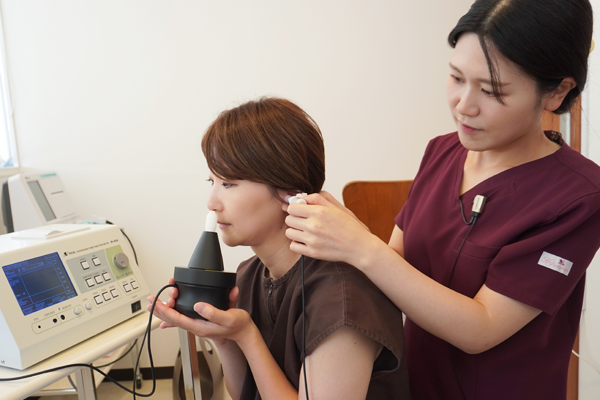
  • Eustachian tube function testing equipment

    Eustachian Tube Function Test

    Using the only testing equipment of its kind available in Japan, we check for Eustachian tube dysfunction and utilize the findings for acupuncture treatment to improve hearing.

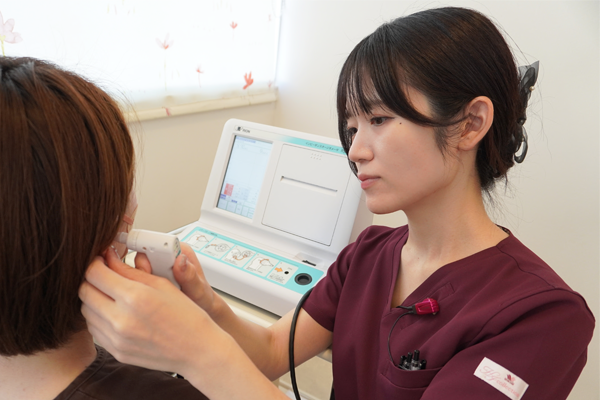
  • Impedance Audiometer

    Eardrum and Middle Ear Test

    We check the movement of the eardrum and the air pressure in the middle ear. The results are used to guide acupuncture treatment for aftereffects of otitis media or facial nerve paralysis.

  • Checking body distortion: Moiré Topography

    Body Distortion

    Curvature of the neck compresses the vertebral artery and worsens blood flow to the brain and inner ear. We confirm this using Moiré topography and perform acupuncture to correct the alignment.

  • Checking blood flow: Cardiovascular Ultrasound

    Blood Flow Abnormalities

    A decline in the body's natural healing power can be identified through blood flow abnormalities. We use cardiovascular ultrasound to check the condition of the limbs and neck, performing acupuncture to improve circulation.

  • Checking stress: Medical Thermography

    Stress State

    Stress that hinders recovery manifests in body surface temperature. We check this using medical thermography and perform acupuncture to balance the autonomic nervous system.